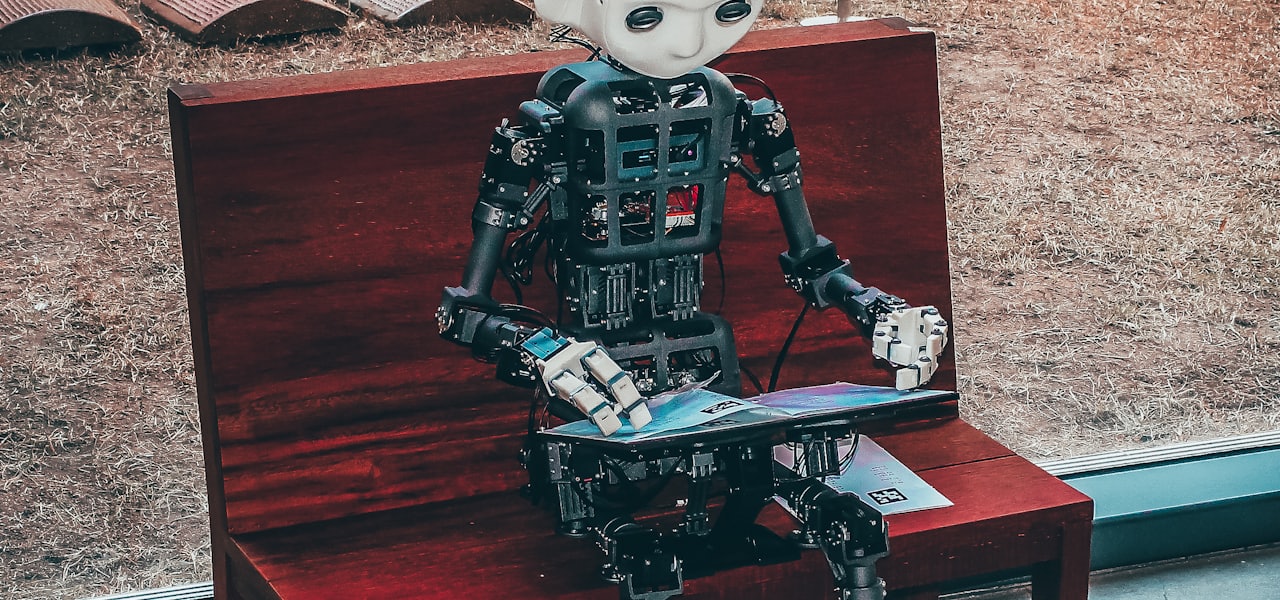
Negobot also referred to as Lolita or Lolita chatbot is a chatterbot that was introduced to the public in 2013, designed by researchers from the University of Deusto and Optenet to catch online pedophiles. It is a conversational agent that utilizes natural language processing (NLP), information retrieval (IR) and Automatic Learning. Because the bot poses as a young female in order to entice and track potential predators, it became known in media as the "virtual Lolita", in reference to Vladimir Nabokov's novel. == Background == In 2013, the University of Deusto researchers published a paper on their work with Negobot and disclosed the text online. In their abstract, the researchers addressed the issue that an increasing number of children are using the internet and that these young users are more susceptible to existing internet risks. Their main objective was to create a chatterbot with the ability to trap online predators that posed a threat to children. They intended to deploy the bot into sites frequented by predators such as social networks and chatrooms. The university researchers used information provided by anti-pedophilia activist organization Perverted-Justice, including examples of online encounters and conversations with sexual predators, to supplement the program's artificial intelligence system. == Features == === Programmed persona === The chatterbot takes the guise of a naive and vulnerable 14-year-old girl. The bot's programmers used methods of artificial intelligence and natural language processing to create a conversational agent fluent in typical teenage slang, misspellings, and knowledge of pop culture. Through these linguistic features, the bot is able to mimic the conversational style of young teenagers. It also features split personalities and seven different patterns of conversation. Negobot's primary creator, Dr. Carlos Laorden, expressed the significance of the bot's distinguishable style of communication, stating that normally, "chatbots tend to be very predictable. Their behavior and interest in a conversation are flat, which is a problem when attempting to detect untrustworthy targets like paedophiles." What makes Negobot different is its game theory feature, which makes it able to "maintain a much more realistic conversation." Apart from being able to imitate a stereotypical teenager, the program is also able to translate messages into different languages. === Game theory === Negobot's designers programmed it with the ability to treat conversations with potential predators as if it were a game, the objective being to collect as much information on the suspect as possible that could provide evidence of pedophilic characteristics and motives. The use of game theory shapes the decisions the bot makes and the overall direction of the conversation. The bot initiates its undercover operations by entering a chat as a passive participant, waiting to be chatted by a user. Once a user elicits conversation, the bot will frame the conversation in such a way that keeps the target engaged, extracting personal information and discouraging it from leaving the chat. The information is then recorded to be potentially sent to the police. If the target seems to lose interest, the bot attempts to make it feel guilty by expressing sentiments of loneliness and emotional need through strategic, formulated responses, ultimately prolonging interaction. In addition, the bot may provide fake information about itself in attempt to lure the target into physical meetings. === Limitations === Despite being able to carry out a realistic conversation, Negobot is still unable to detect linguistic subtleties in the messages of others, including sarcasm. == Controversy == John Carr, a specialist in online child safety, expressed his concern to BBC over the legality of this undercover investigation. He claimed that using the bot on unsuspecting internet users could be considered a form of entrapment or harassment. The type of information that Negobot collects from potential online predators, he said, is unlikely to be upheld in court. Furthermore, he warned that relying on only software without any real-world policing risks enticing individuals to do or say things that they would not have if real-world policing were a factor.
Digital Darkroom
Digital Darkroom was a graphics program for editing gray-scale photos, published by Silicon Beach Software for the Macintosh in 1987. It was programmed by Ed Bomke and Don Cone. Digital Darkroom was the first Macintosh program to incorporate a plug-in architecture. Silicon Beach and Ed Bomke are credited with having coined the term "plug-in". Another innovation of Digital Darkroom was the Magic Wand tool, which also appeared later in Photoshop. When Silicon Beach Software was acquired by Aldus Corporation, Digital Darkroom continued to be published by the Aldus Consumer Division, but was never updated to include color. The trademark "Digital Darkroom" was acquired by MicroFrontier in 1997 and used for a completely new image-editing program that does work with color. The software was acquired by Digimage Arts in 2002 and was sold for both Windows and Mac systems.
Ibotta
Ibotta, Inc. is an American mobile technology company headquartered in Denver, Colorado. Founded in 2011, the company offers cash back rewards on various purchases through its Ibotta Performance Network and direct to consumer app. Ibotta partners with CPG (consumer packaged goods) brands and network publishers to provide these rewards. As of 2024, the company operates solely in the United States. The company's rewards-as-a-service offering, the Ibotta Performance Network, went live in 2022. In August 2019, Ibotta received a $1 billion valuation after its Series D funding, and in 2023, the company surpassed $1.5 billion cash rewards paid to over 50 million consumers since the company's founding. Ibotta became a publicly traded company in April 2024 with a listing on the New York Stock Exchange. As of September 2025, Ibotta is trading at approximately $27.13 per share, marking a 69% decline from its initial public offering price of $88 per share on April 18, 2024. == History == === Founding through early 2019 === Ibotta was founded by current CEO Bryan Leach. The company was incorporated in 2011 and the app launched to both the App Store and Google Play stores in 2012. Early investors included entrepreneur and computer scientist Jim Clark and Tom “TJ” Jermoluk, Chairman of @Home Network. In 2015, Ibotta expanded beyond item level grocery, adding the ability to get cash back on in-store retail purchases. In 2016, in-app mobile commerce began, allowing users to navigate from the Ibotta app to its partners' apps to earn cash back on purchases. In 2016 with a Series C investment, Ibotta had raised over $73 million in funding. In March of that year, Ibotta partnered with Anheuser-Busch to offer cash back for adults who purchased its products. In May, the company partnered with LiveRamp so that companies could use their CRM data to create segmented, personalized campaigns. At the time, the company had around 200 full- and part-time employees and moved from offices in Lower Downtown Denver (LoDo) to a 40,000-square-foot office in the central Denver business district. A year later, the company had to expand to a second floor as it added almost another 100 employees. In 2017, Ibotta added cash back for Uber to its app as well as cash back rewards for online and mobile purchases. In 2018, Ibotta was listed on the Inc. 5,000 list as one of the fastest growing private companies in the U.S. A year later, in January 2019, the Ibotta app had been downloaded more than 30 million times with users receiving a reported $500 million in cash back rewards. That year, Ibotta was the largest mobile company in Colorado with six million monthly active users. === August 2019 to present === In August 2019, Ibotta was valued at $1 billion, following a Series D round of funding. The round was led by Koch Disruptive Technologies, a subsidiary of Koch Industries. 2019 was also the year the company introduced Pay with Ibotta, which allowed users to complete purchases at key retailers on the Ibotta app and earn instant cash back in the process. With that new service, users were able to enter their purchase total and use a QR code to checkout and receive immediate cash back. In 2020, the company partnered with Trees for the Future to plant up to 1 million trees as part of an Earth Month campaign to raise awareness about the waste of unused paper coupons. In response to the COVID-19 pandemic, Ibotta partnered with CPG brands in their “Here to Help” campaign and together committed over $10 million in cash back to American consumers. The company added the ability to earn cash back from online grocery pick-up and delivery orders. Later that year, Ibotta started its free Thanksgiving program, providing users with 100% cash back on select groceries needed for a Thanksgiving meal. By 2022, the company had provided approximately 10 million Thanksgiving meals. In 2021, Ibotta acquired the company OctoShop (originally InStok), a shopping browser extension company. The OctoShop app enables users to compare prices across stores and set restock and price-drop alerts. In April 2022, the Ibotta Performance Network (IPN) was launched. The IPN allows brands to deliver digital offers to consumers through third party publishers. Retailers including Walmart, Dollar General and Family Dollar, food delivery services including Instacart, and convenience stores including Shell are all part of the Ibotta Performance Network. This pay-per-sales or success-based performance network reaches over 200 million consumers. On April 18, 2024, Ibotta had its initial public offering (IPO), trading on the New York Stock Exchange (NYSE) under the ticker symbol IBTA. It was the largest technology IPO in Colorado history. In October 2025, Ibotta announced a partnership with technology and analytics company Circana, integrating Circana's Household Lift measurement into Ibotta campaigns to give CPG brands an increased understanding of the impact of their promotional campaigns. On November 3, 2025, Ibotta launched LiveLift, a tool for companies to measure the return on investment of digital promotions, in order to optimize performance marketing goals. === Athletic partnerships === Ibotta became the official jersey patch partner of the New Orleans Pelicans, a professional men's basketball team in the National Basketball Association (NBA), for the 2020–2021 and 2023–2024 seasons. Ibotta became the official jersey patch partner of the 2023 NBA champion Denver Nuggets baskeetball team beginning in the 2023–2024 season. In March 2023, F1 driver Logan Sargeant, the first U.S. racer to compete in F1 since 2015, partnered with Ibotta. The Ibotta logo was displayed on Sargeant's racing helmet throughout his F1 career. In June 2023, UConn Huskies women's basketball player Paige Bueckers entered into a "name, image, and likeness" (NIL) promotional agreement with Ibotta. According to a press release by Ibotta, the company has agreements with The Brandr Group, which finds NIL opportunities for women college athletes, and the Pearpop social media marketing platform to promote Ibotta. == Legal issues == In April 2025, shareholders filed a class action lawsuit—Fortune v. Ibotta, Inc., in the U.S. District Court for the District of Colorado (Case No. 25-cv-01213)—alleging that the registration statement in connection with Ibotta’s April 2024 initial public offering omitted material information. The complaint claims that, although Ibotta disclosed detailed terms for its contract with Walmart Inc., it failed to warn investors that its agreement with The Kroger Co., its second-largest client, was terminable at will and thus could be canceled without warning, creating a misleading impression of stability.
SMBGhost
SMBGhost (or SMBleedingGhost or CoronaBlue) is a type of security vulnerability, with wormlike features, that affects Windows 10 computers and was first reported publicly on 10 March 2020. == Security vulnerability == A proof of concept (PoC) exploit code was published 1 June 2020 on GitHub by a security researcher. The code could possibly spread to millions of unpatched computers, resulting in as much as tens of billions of dollars in losses. Microsoft recommends all users of Windows 10 versions 1903 and 1909 and Windows Server versions 1903 and 1909 to install patches, and states, "We recommend customers install updates as soon as possible as publicly disclosed vulnerabilities have the potential to be leveraged by bad actors ... An update for this vulnerability was released in March [2020], and customers who have installed the updates, or have automatic updates enabled, are already protected." Workarounds, according to Microsoft, such as disabling SMB compression and blocking port 445, may help but may not be sufficient. According to the advisory division of Homeland Security, "Malicious cyber actors are targeting unpatched systems with the new [threat], ... [and] strongly recommends using a firewall to block server message block ports from the internet and to apply patches to critical- and high-severity vulnerabilities as soon as possible."
PenTile matrix family
PenTile matrix is a family of patented subpixel matrix schemes used in electronic device displays. PenTile is a trademark of Samsung. PenTile matrices are used in AMOLED and LCD displays. These subpixel layouts are specifically designed to operate with proprietary algorithms for subpixel rendering embedded in the display driver, allowing plug and play compatibility with conventional RGB (Red-Green-Blue) stripe panels. == Overview == "PenTile Matrix" (a neologism from penta-, meaning "five" in Greek and tile) describes the geometric layout of the prototypical subpixel arrangement developed in the early 1990s. The layout consists of a quincunx comprising two red subpixels, two green subpixels, and one central blue subpixel in each unit cell. It was inspired by biomimicry of the human retina, which has nearly equal numbers of L and M type cone cells, but significantly fewer S cones. As the S cones are primarily responsible for perceiving blue colors, which do not appreciably affect the perception of luminance, reducing the number of blue subpixels with respect to the red and green subpixels in a display does not reduce the image quality. However, the layout may cause color leakage image distortion, which can be reduced by filters. In some cases the layout causes reduced moiré and blockiness compared to conventional RGB layouts. The PenTile layout is specifically designed to work with and be dependent upon subpixel rendering that uses only one and a quarter subpixel per pixel, on average, to render an image. That is, that any given input pixel is mapped to either a red-centered logical pixel, or a green-centered logical pixel. === History === PenTile was invented by Candice H. Brown Elliott, for which she was awarded the Society for Information Display's Otto Schade Prize in 2014. The technology was licensed by the company Clairvoyante from 2000 until 2008, during which time several prototype PenTile displays were developed by a number of Asian liquid crystal display (LCD) manufacturers. In March 2008, Samsung Electronics acquired Clairvoyante's PenTile IP assets. Samsung then funded a new company, Nouvoyance, Inc. to continue development of the PenTile technology. == PenTile RGBG == PenTile RGBG layout used in AMOLED and plasma displays uses green pixels interleaved with alternating red and blue pixels. The human eye is most sensitive to green, especially for high resolution luminance information. The green subpixels are mapped to input pixels on a one-to-one basis. The red and blue subpixels are subsampled, reconstructing the chroma signal at a lower resolution. The luminance signal is processed using adaptive subpixel rendering filters to optimize reconstruction of high spatial frequencies from the input image, wherein the green subpixels provide the majority of the reconstruction. The red and blue subpixels are capable of reconstructing the horizontal and vertical spatial frequencies, but not the highest of the diagonal. Diagonal high spatial frequency information in the red and blue channels of the input image are transferred to the green subpixels for image reconstruction. Thus the RG-BG scheme creates a color display with one third fewer subpixels than a traditional RGB-RGB scheme but with the same measured luminance display resolution. This is similar to the Bayer filter commonly used in digital cameras. === Devices === As of 2021, "almost all" OLED screens in portable consumer devices use some form of Pentile subpixel layout. == PenTile RGBW == PenTile RGBW technology, used in LCD, adds an extra subpixel to the traditional red, green and blue subpixels that is a clear area without color filtering material and with the only purpose of letting backlight come through, hence W for white. This makes it possible to produce a brighter image compared to an RGB-matrix while using the same amount of power, or produce an equally bright image while using less power. The PenTile RGBW layout uses each red, green, blue and white subpixel to present high-resolution luminance information to the human eyes' red-sensing and green-sensing cone cells, while using the combined effect of all the color subpixels to present lower-resolution chroma (color) information to all three cone cell types. Combined, this optimizes the match of display technology to the biological mechanisms of human vision. The layout uses one third fewer subpixels for the same resolution as the RGB stripe (RGB-RGB) layout, in spite of having four color primaries instead of the conventional three, using subpixel rendering combined with metamer rendering. Metamer rendering optimizes the energy distribution between the white subpixel and the combined red, green, and blue subpixels: W <> RGB, to improve image sharpness. The display driver chip has an RGB to RGBW color vector space converter and gamut mapping algorithm, followed by metamer and subpixel rendering algorithms. In order to maintain saturated color quality, to avoid simultaneous contrast error between saturated colors and peak white brightness, while simultaneously reducing backlight power requirements, the display backlight brightness is under control of the PenTile driver engine. When the image is mostly desaturated colors, those near white or grey, the backlight brightness is significantly reduced, often to less than 50% peak, while the LCD levels are increased to compensate. When the image has very bright saturated colors, the backlight brightness is maintained at higher levels. The PenTile RGBW also has an optional high-brightness mode that doubles the brightness of the desaturated color image areas, such as black-and-white text, for improved outdoor viewability. === Devices === Motorola MC65 Motorola ES55 Motorola ES400 Motorola Atrix 4G Samsung Galaxy Note 10.1 2014 version Lenovo Yoga 2 Pro Lenovo Yoga 3 Pro HP ENVY TouchSmart 14-k022tx Sleekbook MSI GS60 Ghost Pro 4K Lenovo IdeaPad Y50 4K Asus ZenBook UX303LN 4K Asus ZenBook Pro UX501JW LG UH7500/6500/6100 LG ThinQ G7/G7+ Oculus Quest 1 == Controversy == An ongoing controversy regarding the definition or measurement of resolution of color subpixelated flat panel displays led many people to question the resolution claims of PenTile display products. Journalists have noted that in "just about every flat-panel TV in existence, each pixel is composed of one red, one green, and one blue subpixel (RGB), all of uniform size". In traditional flat-panel screens, the resolution is defined by the number of red, green, and blue subpixels, in groups of three, in an array in each axis. As a result, each pixel or group of subpixels can render any colour on the screen, regardless of neighbouring pixels. This is not the case with PenTile screens. The Video Electronics Standards Association (VESA) method of measuring and defining resolution in color displays is to measure the contrast of line pairs, requiring a minimum of 50% Michelson contrast for displays intended for rendering text. The developers of PenTile displays use this VESA criterion for contrast of line pairs to calculate the resolutions specified. In the RGBG layout the alternate red and blue subpixels are 'shared' or sub-sampled with neighboring pixels. Due to the one third lower subpixel density on PenTile displays the pixel structure may be more visible when compared to RGB stripe displays with the same pixel density. The loss of subpixels for a given resolution specification has led some journalists to describe the use of PenTile as "shady practice" and "sort of cheating". For a given size and resolution specification, the PenTile screen can appear grainy, pixelated, speckled, with blurred text on some saturated colors and backgrounds when compared to RGB stripe color. This effect is understood to be caused by the restriction of the number of subpixels that may participate in the image reconstruction when colors are highly saturated to primaries. In the RGBW case, this is caused as the W subpixel will not be available in order to maintain the saturated color. In the RGBG case, this effect will occur when the color boundary is primarily red or blue, as the fully populated (one green per pixel) sub-pixel cannot contribute. For all other cases, text and especially full color images are effectively reconstructed. == Advantages and disadvantages == The PenTile layout reduces the number of subpixels needed to create a specified resolution. Consequently it is possible to achieve an HD resolution on a PenTile AMOLED screen at lower cost than other technologies, and most reviewers note that "300 ppi" (as per VESA - not full pixels) resolution displays (such as Samsung Galaxy S III) make the PenTile effect less obvious than lower resolution PenTile displays (Droid Razr). The second advantage is lower power consumption: the HTC One S's use of a PenTile display makes it more energy efficient and thinner than equivalent LCD screens, giving it better battery life than the HTC One X's IPS LCD. A PenTile AMOLED screen is also
Retrieval-augmented generation
Retrieval-augmented generation (RAG) is a technique that enables large language models (LLMs) to retrieve and incorporate new information from external data sources. With RAG, LLMs first refer to a specified set of documents, then respond to user queries. These documents supplement information from the LLM's pre-existing training data. This allows LLMs to use domain-specific and/or updated information that is not available in the training data. For example, this enables LLM-based chatbots to access internal company data or generate responses based on authoritative sources. RAG improves LLMs by incorporating information retrieval before generating responses. Unlike LLMs that rely on static training data, RAG pulls relevant text from databases, uploaded documents, or web sources. According to Ars Technica, "RAG is a way of improving LLM performance, in essence by blending the LLM process with a web search or other document look-up process to help LLMs stick to the facts." This method helps reduce AI hallucinations, which have caused chatbots to describe policies that don't exist, or recommend nonexistent legal cases to lawyers that are looking for citations to support their arguments. RAG also reduces the need to retrain LLMs with new data, saving on computational and financial costs. Beyond efficiency gains, RAG also allows LLMs to include sources in their responses, so users can verify the cited sources. This provides greater transparency, as users can cross-check retrieved content to ensure accuracy and relevance. The term retrieval-augmented generation (RAG) was introduced in a 2020 paper that described combining a parametric language model with a non-parametric external memory accessed through retrieval at inference time. == RAG and LLM limitations == LLMs can provide incorrect information. For example, when Google first demonstrated its LLM tool "Google Bard" (later re-branded to Gemini), the LLM provided incorrect information about the James Webb Space Telescope. This error contributed to a $100 billion decline in Google's stock value. RAG is used to prevent these errors, but it does not solve all the problems. For example, LLMs can generate misinformation even when pulling from factually correct sources if they misinterpret the context. MIT Technology Review gives the example of an AI-generated response stating, "The United States has had one Muslim president, Barack Hussein Obama." The model retrieved this from an academic book rhetorically titled Barack Hussein Obama: America's First Muslim President? The LLM did not "know" or "understand" the context of the title, generating a false statement. LLMs with RAG are programmed to prioritize new information. This technique has been called "prompt stuffing." Without prompt stuffing, the LLM's input is generated by a user; with prompt stuffing, additional relevant context is added to this input to guide the model's response. This approach provides the LLM with key information early in the prompt, encouraging it to prioritize the supplied data over pre-existing training knowledge. == Process == Retrieval-augmented generation (RAG) enhances large language models (LLMs) by incorporating an information-retrieval mechanism that allows models to access and utilize additional data beyond their original training set. Ars Technica notes that "when new information becomes available, rather than having to retrain the model, all that's needed is to augment the model's external knowledge base with the updated information" ("augmentation"). IBM states that "in the generative phase, the LLM draws from the augmented prompt and its internal representation of its training data to synthesize" an answer. === RAG key stages === Typically, the data to be referenced is converted into LLM embeddings, numerical representations in the form of a large vector space. RAG can be used on unstructured (usually text), semi-structured, or structured data (for example knowledge graphs). These embeddings are then stored in a vector database to allow for document retrieval. Given a user query, a document retriever is first called to select the most relevant documents that will be used to augment the query. This comparison can be done using a variety of methods, which depend in part on the type of indexing used. The model feeds this relevant retrieved information into the LLM via prompt engineering of the user's original query. Newer implementations (as of 2023) can also incorporate specific augmentation modules with abilities such as expanding queries into multiple domains and using memory and self-improvement to learn from previous retrievals. Finally, the LLM can generate output based on both the query and the retrieved documents. Some models incorporate extra steps to improve output, such as the re-ranking of retrieved information, context selection, and fine-tuning. == Applications == Retrieval-augmented generation is used in applications where generated responses need to be grounded in external or frequently updated information. Commonly cited use cases include search engines, question-answering systems, customer support chatbots, enterprise knowledge assistants, content generation, recommendation systems, retail and e-commerce, and industrial or manufacturing workflows. In healthcare, RAG has been studied as a way to ground large language model outputs in external medical knowledge sources, although reviews have noted continuing challenges around evaluation, ethics, and clinical reliability. == Improvements == Improvements to the basic process above can be applied at different stages in the RAG flow. === Encoder === These methods focus on the encoding of text as either dense or sparse vectors. Sparse vectors, which encode the identity of a word, are typically dictionary-length and contain mostly zeros. Dense vectors, which encode meaning, are more compact and contain fewer zeros. Various enhancements can improve the way similarities are calculated in the vector stores (databases). Performance improves by optimizing how vector similarities are calculated. Dot products enhance similarity scoring, while approximate nearest neighbor (ANN) searches improve retrieval efficiency over K-nearest neighbors (KNN) searches. Accuracy may be improved with Late Interactions, which allow the system to compare words more precisely after retrieval. This helps refine document ranking and improve search relevance. Hybrid vector approaches may be used to combine dense vector representations with sparse one-hot vectors, taking advantage of the computational efficiency of sparse dot products over dense vector operations. Other retrieval techniques focus on improving accuracy by refining how documents are selected. Some retrieval methods combine sparse representations, such as SPLADE, with query expansion strategies to improve search accuracy and recall. === Retriever-centric methods === These methods aim to enhance the quality of document retrieval in vector databases: Pre-training the retriever using the Inverse Cloze Task (ICT), a technique that helps the model learn retrieval patterns by predicting masked text within documents. Supervised retriever optimization aligns retrieval probabilities with the generator model's likelihood distribution. This involves retrieving the top-k vectors for a given prompt, scoring the generated response's perplexity, and minimizing KL divergence between the retriever's selections and the model's likelihoods to refine retrieval. Reranking techniques can refine retriever performance by prioritizing the most relevant retrieved documents during training. === Language model === By redesigning the language model with the retriever in mind, a 25-time smaller network can get comparable perplexity as its much larger counterparts. Because it is trained from scratch, this method (Retro) incurs the high cost of training runs that the original RAG scheme avoided. The hypothesis is that by giving domain knowledge during training, Retro needs less focus on the domain and can devote its smaller weight resources only to language semantics. The redesigned language model is shown here. It has been reported that Retro is not reproducible, so modifications were made to make it so. The more reproducible version is called Retro++ and includes in-context RAG. === Chunking === Chunking involves various strategies for breaking up the data into vectors so the retriever can find details in it. Three types of chunking strategies are: Fixed length with overlap. This is fast and easy. Overlapping consecutive chunks helps to maintain semantic context across chunks. Syntax-based chunks can break the document up into sentences. Libraries such as spaCy or NLTK can also help. File format-based chunking. Certain file types have natural chunks built in, and it's best to respect them. For example, code files are best chunked and vectorized as whole functions or classes. HTML files should leave