A large language model (LLM) is a type of machine learning model designed for natural language processing tasks such as language generation. LLMs are language models with many parameters, and are trained with self-supervised learning on a vast amount of text. == List == For the training cost column, 1 petaFLOP-day equals 1 petaFLOP/sec × 1 day, or 8.64×10¹⁹ FLOP (floating point operations). Only the cost of the largest model is shown. The number of parameters is measured in billions, and the training cost is measured in petaFLOP-days. === 2018 === === 2019 === === 2020 === === 2021 === === 2022 === === 2023 === === 2024 === === 2025 === === 2026 ===
N-World
N-World is a 3D graphics package developed by Nichimen Graphics in the 1990s, for Silicon Graphics and Windows NT workstations. Intended primarily for video game content creation, it has polygon modeling tools, 2D and 3D paint, scripting, color reduction, and exporters for several popular game consoles. After its initial release on Windows NT, N-World was renamed Mirai. The winged edge 3D modeler in N-World inspired the development at Nichimen Graphics of Nendo, a standalone 3D modeler, which in turn inspired the open source modeler Wings 3D. == History == N-World originated with Symbolics, a computer manufacturer notable for producing Lisp-based systems in the 1980s. Among the software packages that were produced for Symbolics computers are S-Graphics, a 3D animation suite that includes modules for polygon modeling, dynamics, paint, and rendering — titled S-Geometry, S-Dynamics, S-Paint, and S-Render, respectively. In 1992, Japanese trading company Nichimen Corporation purchased the rights to S-Graphics, ported it to Silicon Graphics IRIX, and marketed it as N-World. N-World retains the Lisp-based underpinnings of its predecessor, but was targeted at interactive content producers, with features useful for game developers. It was priced at US$16,995 (equivalent to $34,100 in 2025) for the full suite, later reduced to $9,995 when ported to Windows NT in 1997. N-World was used to create graphics for many console games in the 1990s, specifically most of the Nintendo 64 games, like Super Mario 64 and Final Fantasy VII. It was superseded by Mirai in 1999. == Features == The N-World package, like its predecessor S-Graphics, is divided into several components: N-Geometry: 3D polygon-based modeling tools, including smoothing, "magnet" geometry editing, and instancing. N-Dynamics: Animation tools including scripting, curve-based animation, and skeletal animation. N-Render: Surfacing and rendering tools with ray tracing and materials output to various game console formats. N-Paint: 2D and 3D paint with mattes, effects, color reduction, and a visual VRAM editor for PlayStation. Game Tools: Utilities for game developers, including exporters for PlayStation, Nintendo 64, and Saturn consoles. == Credits == The following games were created using N-World. Rap Stars Online
Neurorobotics
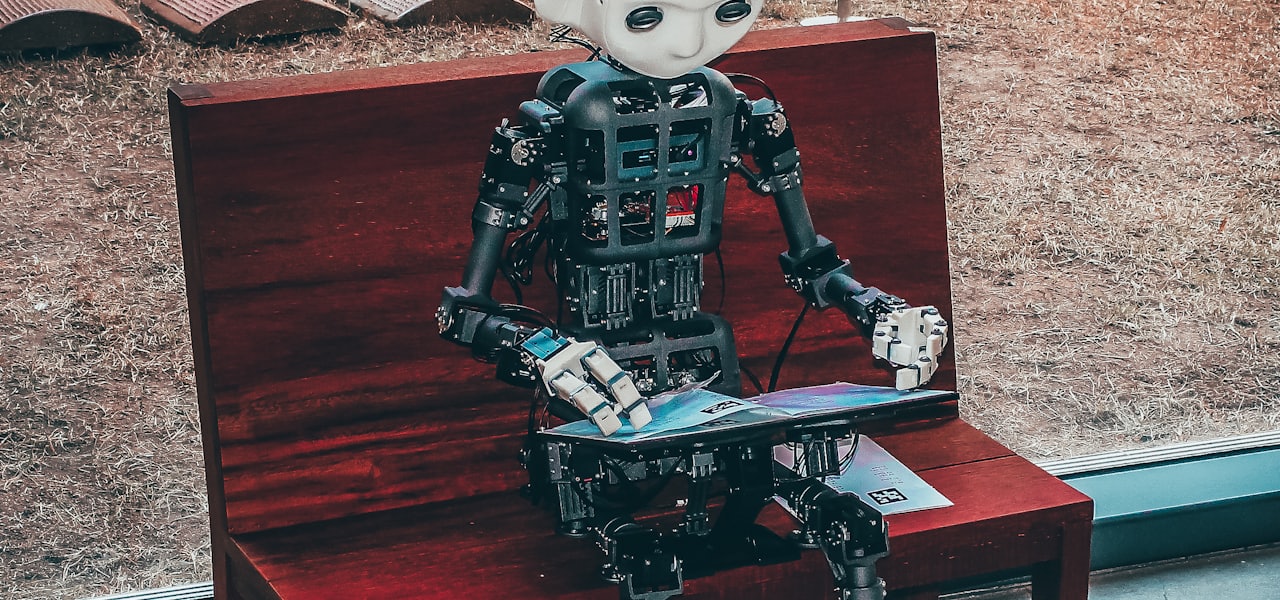
Neurorobotics is the combined study of neuroscience, robotics, and artificial intelligence. It is the science and technology of embodied autonomous neural systems. Neural systems include brain-inspired algorithms (e.g. connectionist networks), computational models of biological neural networks (e.g. artificial spiking neural networks, large-scale simulations of neural microcircuits) and actual biological systems (e.g. in vivo and in vitro neural nets). Such neural systems can be embodied in machines with mechanic or any other forms of physical actuation. This includes robots, prosthetic or wearable systems but also, at smaller scale, micro-machines and, at the larger scales, furniture and infrastructures. Neurorobotics is that branch of neuroscience with robotics, which deals with the study and application of science and technology of embodied autonomous neural systems like brain-inspired algorithms. It is based on the idea that the brain is embodied and the body is embedded in the environment. Therefore, most neurorobots are required to function in the real world, as opposed to a simulated environment. Beyond brain-inspired algorithms for robots neurorobotics may also involve the design of brain-controlled robot systems. == Major classes of models == Neurorobots can be divided into various major classes based on the robot's purpose. Each class is designed to implement a specific mechanism of interest for study. Common types of neurorobots are those used to study motor control, memory, action selection, and perception. === Locomotion and motor control === Neurorobots are often used to study motor feedback and control systems, and have proved their merit in developing controllers for robots. Locomotion is modeled by a number of neurologically inspired theories on the action of motor systems. Locomotion control has been mimicked using models or central pattern generators, clumps of neurons capable of driving repetitive behavior, to make four-legged walking robots. Other groups have expanded the idea of combining rudimentary control systems into a hierarchical set of simple autonomous systems. These systems can formulate complex movements from a combination of these rudimentary subsets. This theory of motor action is based on the organization of cortical columns, which progressively integrate from simple sensory input into a complex afferent signals, or from complex motor programs to simple controls for each muscle fiber in efferent signals, forming a similar hierarchical structure. Another method for motor control uses learned error correction and predictive controls to form a sort of simulated muscle memory. In this model, awkward, random, and error-prone movements are corrected for using error feedback to produce smooth and accurate movements over time. The controller learns to create the correct control signal by predicting the error. Using these ideas, robots have been designed which can learn to produce adaptive arm movements or to avoid obstacles in a course. === Learning and memory systems === Robots designed to test theories of animal memory systems. Many studies examine the memory system of rats, particularly the rat hippocampus, dealing with place cells, which fire for a specific location that has been learned. Systems modeled after the rat hippocampus are generally able to learn mental maps of the environment, including recognizing landmarks and associating behaviors with them, allowing them to predict the upcoming obstacles and landmarks. Another study has produced a robot based on the proposed learning paradigm of barn owls for orientation and localization based on primarily auditory, but also visual stimuli. The hypothesized method involves synaptic plasticity and neuromodulation, a mostly chemical effect in which reward neurotransmitters such as dopamine or serotonin affect the firing sensitivity of a neuron to be sharper. The robot used in the study adequately matched the behavior of barn owls. Furthermore, the close interaction between motor output and auditory feedback proved to be vital in the learning process, supporting active sensing theories that are involved in many of the learning models. Neurorobots in these studies are presented with simple mazes or patterns to learn. Some of the problems presented to the neurorobot include recognition of symbols, colors, or other patterns and execute simple actions based on the pattern. In the case of the barn owl simulation, the robot had to determine its location and direction to navigate in its environment. === Action selection and value systems === Action selection studies deal with negative or positive weighting to an action and its outcome. Neurorobots can and have been used to study simple ethical interactions, such as the classical thought experiment where there are more people than a life raft can hold, and someone must leave the boat to save the rest. However, more neurorobots used in the study of action selection contend with much simpler persuasions such as self-preservation or perpetuation of the population of robots in the study. These neurorobots are modeled after the neuromodulation of synapses to encourage circuits with positive results. In biological systems, neurotransmitters such as dopamine or acetylcholine positively reinforce neural signals that are beneficial. One study of such interaction involved the robot Darwin VII, which used visual, auditory, and a simulated taste input to "eat" conductive metal blocks. The arbitrarily chosen good blocks had a striped pattern on them while the bad blocks had a circular shape on them. The taste sense was simulated by conductivity of the blocks. The robot had positive and negative feedbacks to the taste based on its level of conductivity. The researchers observed the robot to see how it learned its action selection behaviors based on the inputs it had. Other studies have used herds of small robots which feed on batteries strewn about the room, and communicate its findings to other robots. === Sensory perception === Neurorobots have also been used to study sensory perception, particularly vision. These are primarily systems that result from embedding neural models of sensory pathways in automatas. This approach gives exposure to the sensory signals that occur during behavior and also enables a more realistic assessment of the degree of robustness of the neural model. It is well known that changes in the sensory signals produced by motor activity provide useful perceptual cues that are used extensively by organisms. For example, researchers have used the depth information that emerges during replication of human head and eye movements to establish robust representations of the visual scene. == Biological robots == Biological robots are not officially neurorobots in that they are not neurologically inspired AI systems, but actual neuron tissue wired to a robot. This employs the use of cultured neural networks to study brain development or neural interactions. These typically consist of a neural culture raised on a multielectrode array (MEA), which is capable of both recording the neural activity and stimulating the tissue. In some cases, the MEA is connected to a computer which presents a simulated environment to the brain tissue and translates brain activity into actions in the simulation, as well as providing sensory feedback The ability to record neural activity gives researchers a window into a brain, which they can use to learn about a number of the same issues neurorobots are used for. An area of concern with the biological robots is ethics. Many questions are raised about how to treat such experiments. The central question concerns consciousness and whether or not the rat brain experiences it. There are many theories about how to define consciousness. == Implications for neuroscience == Neuroscientists benefit from neurorobotics because it provides a blank slate to test various possible methods of brain function in a controlled and testable environment. While robots are more simplified versions of the systems they emulate, they are more specific, allowing more direct testing of the issue at hand. They also have the benefit of being accessible at all times, while it is more difficult to monitor large portions of a brain while the human or animal is active, especially individual neurons. The development of neuroscience has produced neural treatments. These include pharmaceuticals and neural rehabilitation. Progress is dependent on an intricate understanding of the brain and how exactly it functions. It is difficult to study the brain, especially in humans, due to the danger associated with cranial surgeries. Neurorobots can improved the range of tests and experiments that can be performed in the study of neural processes.
Intelligent decision support system
An intelligent decision support system (IDSS) is a decision support system that makes extensive use of artificial intelligence (AI) techniques. Use of AI techniques in management information systems has a long history – indeed terms such as "Knowledge-based systems" (KBS) and "intelligent systems" have been used since the early 1980s to describe components of management systems, but the term "Intelligent decision support system" is thought to originate with Clyde Holsapple and Andrew Whinston in the late 1970s. Examples of specialized intelligent decision support systems include Flexible manufacturing systems (FMS), intelligent marketing decision support systems and medical diagnosis systems. Ideally, an intelligent decision support system should behave like a human consultant: supporting decision makers by gathering and analysing evidence, identifying and diagnosing problems, proposing possible courses of action and evaluating such proposed actions. The aim of the AI techniques embedded in an intelligent decision support system is to enable these tasks to be performed by a computer, while emulating human capabilities as closely as possible. Many IDSS implementations are based on expert systems, a well established type of KBS that encode knowledge and emulate the cognitive behaviours of human experts using predicate logic rules, and have been shown to perform better than the original human experts in some circumstances. Expert systems emerged as practical applications in the 1980s based on research in artificial intelligence performed during the late 1960s and early 1970s. They typically combine knowledge of a particular application domain with an inference capability to enable the system to propose decisions or diagnoses. Accuracy and consistency can be comparable to (or even exceed) that of human experts when the decision parameters are well known (e.g. if a common disease is being diagnosed), but performance can be poor when novel or uncertain circumstances arise. Research in AI focused on enabling systems to respond to novelty and uncertainty in more flexible ways is starting to be used in IDSS. For example, intelligent agents that perform complex cognitive tasks without any need for human intervention have been used in a range of decision support applications. Capabilities of these intelligent agents include knowledge sharing, machine learning, data mining, and automated inference. A range of AI techniques such as case based reasoning, rough sets and fuzzy logic have also been used to enable decision support systems to perform better in uncertain conditions. A 2009 research about a multi-artificial system intelligence system named IILS is proposed to automate problem-solving processes within the logistics industry. The system involves integrating intelligence modules based on case-based reasoning, multi-agent systems, fuzzy logic, and artificial neural networks aiming to offer advanced logistics solutions and support in making well-informed, high-quality decisions to address a wide range of customer needs and challenges.
Singularity studies
Singularity studies is an interdisciplinary academic field which examines the idea of technological singularity — the hypothesised point at which artificial intelligence may surpass human intelligence, might be attained by artificial intelligence (AI), robotics, and other technologies and sciences, and its social impacts. In this academic field, the study and research are conducted across a broad array of terrains such as information science, robotics, social informatics, economics, philosophy, and ethics. The primary aim of singularity studies is to gain an integrative understanding of the transformation of social systems occurring in tandem with the explosive evolution of AI and also the changes to be effected by such transformation in the view of humans, ethics, and legal systems. == History == An academic work on technological singurality has appeared in computer science, philosophy, sociology, and law since the early 1990s. Early discussions of an intelligence explosion were popularised by science-fiction writer Vernor Vinge in 1993 and later systematised by futurist Ray Kurzweil. Since the 2010s, universities such as Oxford, Stanford, and Keio have established dedicated programmes, while peer-reviewed journals have begun to publish scenario analyses and policy studies. Ongoing debates question the predictive value of singularity scenarios and warn against a deterministic view of technology. == Characteristics of research == Singularity studies extends beyond mere future predictions and offer an intellectual foundation for proactively designing and creating a desirable future. Principal research themes in this realm include: Ethics of AI; Social implications of technologies; Possibility of harmonious coexistence of humans and AI; Communication with AI; and Redesign of social systems. == Technologists and academics == Vernor Vinge: Propounded the concept of singularity in 1993, making a massive impact on the academic and science-fiction spheres. Ray Kurzweil: Predicted the advent around 2045 of the technological singularity in his 2005 book The Singularity Is Near. Nick Bostrom: Offered philosophical reflections on superintelligence and the risks posed by AI. He is the founding director of the now-dissolved Future of Humanity Institute at the University of Oxford. === Japan === Kento Sasano: A social informatician, AI educator, and inventor. He is the president of the Japan Society of Singularity Studies. == Challenges and outlook == Singularity studies is still evolving as an academic field, and quite a few challenges remain unresolved in regard to the systematization of their theories, research methods, and educational curricula. That said, in this day and age of accelerating technological and societal shifts, interdisciplinary approaches have gained in importance and are drawing much attention in the arenas of scholarly research, intercorporate collaboration, and policy planning.
Avid Free DV
Avid Free DV is a non-linear editing video editing software application developed by Avid Technology. Avid introduced Free DV in January 2003 at the 2003 MacWorld Expo; the company discontinued it in September 2007. Free DV was intended to give editors a sample of the Avid interface to use in deciding whether or not to purchase Avid software, so when compared with other Avid products its features were relatively minimal. When it was available it was not limited by time or watermarking, so it could be used as a non-linear editor for as long as desired. == Comparisons == When compared with other consumer-end non-linear editors such as iMovie and Windows Movie Maker, it sported more powerful video processing tools, but lacked the ease-of-use and shallow learning curve emphasized in similar programs because it had the full interface of the professional Avid system. However, Avid did offer a number of flash-based tutorials to help new users learn how to use the program for capturing, editing, clipping, processing, and outputting audio/video, among other things. == Limitations == The limitations of Avid Free DV included that it allowed only two video and audio tracks, had fewer editing tools than other Avid products, had few import and export formats, and allowed capture and output of standard-definition DV only, via FireWire. Avid Free DV projects and media were not compatible with other Avid systems. As the name implied, Avid Free DV was available as a free download, although users were required to complete a short survey on the Avid website before they were given a download link and key. In addition to using Free DV to evaluate Avid prior to purchase, it could also act as a stepping stone for people wishing to learn to use Avid's other editing products, such as Xpress Pro, Media Composer and Symphony. While additional skills and techniques are necessary to use these professionally geared systems, the basic operation remains the same. == Operating systems == Avid Free DV was available for Windows XP and Mac OS X. The officially supported Mac OS X versions were Panther versions up to 10.3.5, and Tiger versions up to 10.4.3 only. == Supported formats == Avid Free DV supported QuickTime (MOV) and DV AVIs. == Reception == John P. Mello Jr. of The Boston Globe gave Free DV a negative review, finding the user interface obfuscatory and the process of ingesting video error-prone. He summarized: "Professional video editors who use an Avid competitor may jump at the chance to take a free look at how Avid does things. But for the merely curious, this software is a nightmare". Video Systems's Steve Mullen opined that its lack of interoperability with Avid's professional editing software contracted Avid's stated goal to entice budding video editors into buying into the company's software ecosystem.
JAX (software)
JAX is a Python library for accelerator-oriented array computation and program transformation, designed for high-performance numerical computing and large-scale machine learning. It is developed by Google with contributions from Nvidia and other community contributors. It is described as bringing together a modified version of the automatic differentiation system autograd and OpenXLA's XLA (Accelerated Linear Algebra). It is designed to follow the structure and workflow of NumPy as closely as possible and works with various existing frameworks such as TensorFlow and PyTorch. The primary features of JAX are: Providing a unified NumPy-like interface to computations that run on CPU, GPU, or TPU, in local or distributed settings. Built-in Just-In-Time (JIT) compilation via OpenXLA, an open-source machine learning compiler ecosystem. Efficient evaluation of gradients via its automatic differentiation transformations. Automatic vectorization to efficiently map functions over arrays representing batches of inputs. == Libraries using Jax == Flax Equinox Optax