Text-to-Image personalization is a task in deep learning for computer graphics that augments pre-trained text-to-image generative models. In this task, a generative model that was trained on large-scale data (usually a foundation model), is adapted such that it can generate images of novel, user-provided concepts. These concepts are typically unseen during training, and may represent specific objects (such as the user's pet) or more abstract categories (new artistic style or object relations). Text-to-Image personalization methods typically bind the novel (personal) concept to new words in the vocabulary of the model. These words can then be used in future prompts to invoke the concept for subject-driven generation, inpainting, style transfer and even to correct biases in the model. To do so, models either optimize word-embeddings, fine-tune the generative model itself, or employ a mixture of both approaches. == Technology == Text-to-Image personalization was first proposed during August 2022 by two concurrent works, Textual Inversion and DreamBooth. In both cases, a user provides a few images (typically 3–5) of a concept, like their own dog, together with a coarse descriptor of the concept class (like the word "dog"). The model then learns to represent the subject through a reconstruction based objective, where prompts referring to the subject are expected to reconstruct images from the training set. In Textual Inversion, the personalized concepts are introduced into the text-to-image model by adding new words to the vocabulary of the model. Typical text-to-image models represent words (and sometimes parts-of-words) as tokens, or indices in a predefined dictionary. During generation, an input prompt is converted into such tokens, each of which is converted into a ‘word-embedding’: a continuous vector representation which is learned for each token as part of the model's training. Textual Inversion proposes to optimize a new word-embedding vector for representing the novel concept. This new embedding vector can then be assigned to a user-chosen string, and invoked whenever the user's prompt contains this string. In DreamBooth, rather than optimizing a new word vector, the full generative model itself is fine-tuned. The user first selects an existing token, typically one which rarely appears in prompts. The subject itself is then represented by a string containing this token, followed by a coarse descriptor of the subject's class. A prompt describing the subject will then take the form: "A photo of
Landmark point
In morphometrics, landmark point or shortly landmark is a point in a shape object in which correspondences between and within the populations of the object are preserved. In other disciplines, landmarks may be known as vertices, anchor points, control points, sites, profile points, 'sampling' points, nodes, markers, fiducial markers, etc. Landmarks can be defined either manually by experts or automatically by a computer program. There are three basic types of landmarks: anatomical landmarks, mathematical landmarks or pseudo-landmarks. An anatomical landmark is a biologically-meaningful point in an organism. Usually experts define anatomical points to ensure their correspondences within the same species. Examples of anatomical landmark in shape of a skull are the eye corner, tip of the nose, jaw, etc. Anatomical landmarks determine homologous parts of an organism, which share a common ancestry. Mathematical landmarks are points in a shape that are located according to some mathematical or geometrical property, for instance, a high curvature point or an extreme point. A computer program usually determines mathematical landmarks used for an automatic pattern recognition. Pseudo-landmarks are constructed points located between anatomical or mathematical landmarks. A typical example is an equally spaced set of points between two anatomical landmarks to get more sample points from a shape. Pseudo-landmarks are useful during shape matching, when the matching process requires a large number of points.
Artificial general intelligence
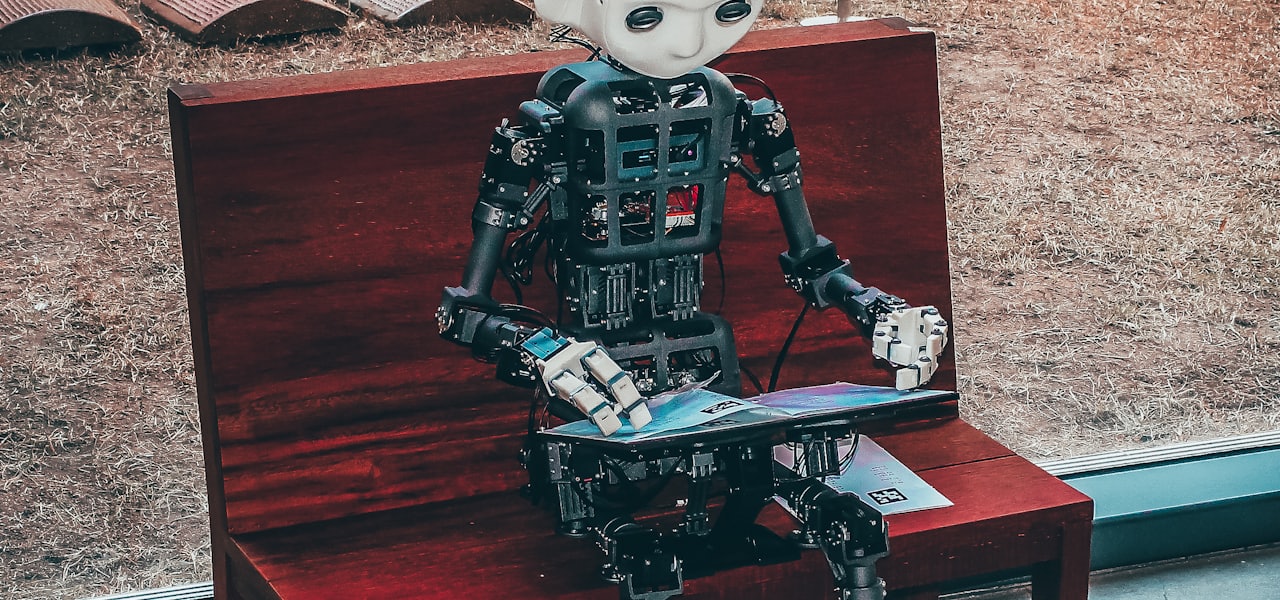
Artificial general intelligence (AGI) is a hypothetical type of artificial intelligence that matches or surpasses human capabilities across virtually all cognitive tasks. Beyond AGI, artificial superintelligence (ASI) would outperform the best human abilities across every domain by a wide margin. Unlike artificial narrow intelligence (ANI), whose competence is confined to well‑defined tasks, an AGI system can generalise knowledge, transfer skills between domains, and solve novel problems without task‑specific reprogramming. Creating AGI is a stated goal of technology companies such as OpenAI, Google, xAI, and Meta. A 2020 survey identified 72 active AGI research and development projects across 37 countries. AGI is a common topic in science fiction and futures studies. Contention exists over whether AGI represents an existential risk. Some AI experts and industry figures have stated that mitigating the risk of human extinction posed by AGI should be a global priority. Others find the development of AGI to be in too remote a stage to present such a risk. == Terminology == AGI is also known as strong AI, full AI, human-level AI, human-level intelligent AI, or general intelligent action. The term "artificial general intelligence" was used in 1997 by Mark Gubrud in a discussion of the implications of fully automated military production and operations. A mathematical formalism of AGI named AIXI was proposed in 2000 by Marcus Hutter, who defines intelligence as "an agent’s ability to achieve goals or succeed in a wide range of environments". This type of AGI has also been called "universal artificial intelligence". The term AGI was re-introduced and popularized by Shane Legg and Ben Goertzel around 2002. Some academic sources reserve the term "strong AI" for computer programs that will experience sentience or consciousness. In contrast, weak AI (or narrow AI) can solve a specific problem but lacks general cognitive abilities. Some academic sources use "weak AI" to refer more broadly to any programs that neither experience consciousness nor have a mind in the same sense as humans. Related concepts include artificial superintelligence and transformative AI. An artificial superintelligence (ASI) is a hypothetical type of AGI that is much more generally intelligent than humans, while the notion of transformative AI relates to AI having a large impact on society, for example, similar to the agricultural or industrial revolution. A framework for classifying AGI was proposed in 2023 by Google DeepMind researchers. They define five performance levels of AGI: emerging, competent, expert, virtuoso, and superhuman. For example, a competent AGI is defined as an AI that outperforms 50% of skilled adults in a wide range of non-physical tasks, and a superhuman AGI (i.e., an artificial superintelligence) is similarly defined but with a threshold of 100%. They consider large language models like ChatGPT or LLaMA 2 to be instances of emerging AGI (comparable to unskilled humans). Regarding the autonomy of AGI and associated risks, they define five levels: tool (fully in human control), consultant, collaborator, expert, and agent (fully autonomous). == Characteristics == There is no single agreed-upon definition of intelligence as applied to computers. Computer scientist John McCarthy wrote in 2007: "We cannot yet characterize in general what kinds of computational procedures we want to call intelligent." === Intelligence traits === Researchers generally hold that a system is required to do all of the following to be regarded as an AGI: reason, use strategy, solve puzzles, and make judgments under uncertainty, represent knowledge, including common sense knowledge, plan, learn, communicate in natural language, if necessary, integrate these skills in completion of any given goal. Many interdisciplinary approaches (e.g. cognitive science, computational intelligence, and decision making) consider additional traits such as imagination (the ability to form novel mental images and concepts) and autonomy. Computer-based systems exhibiting these capabilities are now widespread, with modern large language models demonstrating computational creativity, automated reasoning, and decision support simultaneously across domains. === Physical traits === Other capabilities are considered desirable in intelligent systems, as they may affect intelligence or aid in its expression. These include: the ability to sense (e.g. see, hear, etc.), and the ability to act (e.g. move and manipulate objects, change location to explore, etc.) This includes the ability to detect and respond to hazard. === Tests for human-level AGI === Several tests meant to confirm human-level AGI have been considered. ==== Turing test ==== The Turing test was proposed by Alan Turing in his 1950 paper "Computing Machinery and Intelligence". This test involves a human judge engaging in natural language conversations with both a human and a machine designed to generate human-like responses. The machine passes the test if it can convince the judge that it is human a significant fraction of the time. Turing proposed this as a practical measure of machine intelligence, focusing on the ability to produce human-like responses rather than on the internal workings of the machine. The idea of the test is that the machine has to try and pretend to be a man, by answering questions put to it, and it will only pass if the pretence is reasonably convincing. A considerable portion of a jury, who should not be experts about machines, must be taken in by the pretence. In 2014, a chatbot named Eugene Goostman, designed to imitate a 13-year-old Ukrainian boy, reportedly passed a Turing Test event by convincing 33% of judges that it was human. However, this claim was met with significant skepticism from the AI research community, who questioned the test's implementation and its relevance to AGI. A 2025 pre‑registered, three‑party Turing‑test study by Cameron R. Jones and Benjamin K. Bergen showed that GPT-4.5 was judged to be the human in 73% of five‑minute text conversations—surpassing the 67% humanness rate of real confederates and meeting the researchers' criterion for having passed the test. ==== Ikea test ==== The "Ikea test", also known as the Flat Pack Furniture Test, involves an AI controlling a robot which attempts to assemble an Ikea flat-pack furniture product after having been shown the parts and instructions. As early as 2013, MIT's IkeaBot demonstrated fully autonomous multi-robot assembly of an IKEA Lack table in ten minutes, with no human intervention and no pre-programmed assembly instructions. The robots inferred the assembly sequence from the geometry of the parts alone. ==== Coffee test ==== Steve Wozniak proposed a test where a machine is required to enter an average American home and figure out how to make coffee. It must find the coffee machine, find the coffee, add water, find a mug, and brew the coffee by pushing the proper buttons. This test has been substantially approached across multiple systems. In January 2024, Figure AI's Figure 01 humanoid learned to operate a Keurig coffee machine autonomously after watching video demonstrations, using end-to-end neural networks to translate visual input into motor actions. In 2025, researchers at the University of Edinburgh published the ELLMER framework in Nature Machine Intelligence, demonstrating a robotic arm that interprets verbal instructions, analyses its surroundings, and autonomously makes coffee in dynamic kitchen environments — adapting to unforeseen obstacles in real time rather than following pre-programmed sequences. ==== Suleyman's test ==== Mustafa Suleyman's test proposes giving an AI model US$100,000 and asking it to obtain US$1 million. ==== Use of video-games ==== Adams, et al. propose that the ability to learn and succeed in a wide range of video games can be used to test AI intelligence. This range would include games unknown to the AGI developers before the test is administered. === AI-complete problems === A problem is informally called "AI-complete" or "AI-hard" if it is believed that AGI would be needed to solve it, because the solution is beyond the capabilities of a purpose-specific algorithm. == History == === Classical AI === Modern AI research began in the mid-1950s. The first generation of AI researchers were convinced that artificial general intelligence was possible and that it would exist in just a few decades. AI pioneer Herbert A. Simon wrote in 1965: "machines will be capable, within twenty years, of doing any work a man can do". Their predictions were the inspiration for Stanley Kubrick and Arthur C. Clarke's fictional character HAL 9000, who embodied what AI researchers believed they could create by the year 2001. AI pioneer Marvin Minsky was a consultant on the project of making HAL 9000 as realistic as possible according to the consensus predictions of the time. He said in 1967, "Within a generation... the problem of
Concept drift
In predictive analytics, data science, machine learning and related fields, concept drift or drift is an evolution of data that invalidates the data model. It happens when the statistical properties of the target variable, which the model is trying to predict, change over time in unforeseen ways. This causes problems because the predictions become less accurate as time passes. Drift detection and drift adaptation are of paramount importance in the fields that involve dynamically changing data and data models. == Predictive model decay == In machine learning and predictive analytics this drift phenomenon is called concept drift. In machine learning, a common element of a data model are the statistical properties, such as probability distribution of the actual data. If they deviate from the statistical properties of the training data set, then the learned predictions may become invalid, if the drift is not addressed. == Data configuration decay == Another important area is software engineering, where three types of data drift affecting data fidelity may be recognized. Changes in the software environment ("infrastructure drift") may invalidate software infrastructure configuration. "Structural drift" happens when the data schema changes, which may invalidate databases. "Semantic drift" is changes in the meaning of data while the structure does not change. In many cases this may happen in complicated applications when many independent developers introduce changes without proper awareness of the effects of their changes in other areas of the software system. For many application systems, the nature of data on which they operate are subject to changes for various reasons, e.g., due to changes in business model, system updates, or switching the platform on which the system operates. In the case of cloud computing, infrastructure drift that may affect the applications running on cloud may be caused by the updates of cloud software. There are several types of detrimental effects of data drift on data fidelity. Data corrosion is passing the drifted data into the system undetected. Data loss happens when valid data are ignored due to non-conformance with the applied schema. Squandering is the phenomenon when new data fields are introduced upstream in the data processing pipeline, but somewhere downstream these data fields are absent. == Inconsistent data == "Data drift" may refer to the phenomenon when database records fail to match the real-world data due to the changes in the latter over time. This is a common problem with databases involving people, such as customers, employees, citizens, residents, etc. Human data drift may be caused by unrecorded changes in personal data, such as place of residence or name, as well as due to errors during data input. "Data drift" may also refer to inconsistency of data elements between several replicas of a database. The reasons can be difficult to identify. A simple drift detection is to run checksum regularly. However the remedy may be not so easy. == Examples == The behavior of the customers in an online shop may change over time. For example, if weekly merchandise sales are to be predicted, and a predictive model has been developed that works satisfactorily. The model may use inputs such as the amount of money spent on advertising, promotions being run, and other metrics that may affect sales. The model is likely to become less and less accurate over time – this is concept drift. In the merchandise sales application, one reason for concept drift may be seasonality, which means that shopping behavior changes seasonally. Perhaps there will be higher sales in the winter holiday season than during the summer, for example. Concept drift generally occurs when the covariates that comprise the data set begin to explain the variation of your target set less accurately — there may be some confounding variables that have emerged, and that one simply cannot account for, which renders the model accuracy to progressively decrease with time. Generally, it is advised to perform health checks as part of the post-production analysis and to re-train the model with new assumptions upon signs of concept drift. == Possible remedies == To prevent deterioration in prediction accuracy because of concept drift, reactive and tracking solutions can be adopted. Reactive solutions retrain the model in reaction to a triggering mechanism, such as a change-detection test or control charts from statistical process control, to explicitly detect concept drift as a change in the statistics of the data-generating process. When concept drift is detected, the current model is no longer up-to-date and must be replaced by a new one to restore prediction accuracy. A shortcoming of reactive approaches is that performance may decay until the change is detected. Tracking solutions seek to track the changes in the concept by continually updating the model. Methods for achieving this include online machine learning, frequent retraining on the most recently observed samples, and maintaining an ensemble of classifiers where one new classifier is trained on the most recent batch of examples and replaces the oldest classifier in the ensemble. Contextual information, when available, can be used to better explain the causes of the concept drift: for instance, in the sales prediction application, concept drift might be compensated by adding information about the season to the model. By providing information about the time of the year, the rate of deterioration of your model is likely to decrease, but concept drift is unlikely to be eliminated altogether. This is because actual shopping behavior does not follow any static, finite model. New factors may arise at any time that influence shopping behavior, the influence of the known factors or their interactions may change. Concept drift cannot be avoided for complex phenomena that are not governed by fixed laws of nature. All processes that arise from human activity, such as socioeconomic processes, and biological processes are likely to experience concept drift. Therefore, periodic retraining, also known as refreshing, of any model is necessary. === Remedy methods === DDM (Drift Detection Method): detects drift by monitoring the model's error rate over time. When the error rate passes a set threshold, it enters a warning phase, and if it passes another threshold, it enters a drift phase. EDDM (Early Drift Detection Method): improves DDM's detection rate by tracking the average distance between two errors instead of only the error rate. ADWIN (Adaptive Windowing): dynamically stores a window of recent data and warns the user if it detects a significant change between the statistics of the window's earlier data compared to more recent data. KSWIN (Kolmogorov–Smirnov Windowing): detects drift based on the Kolmogorov-Smirnov statistical test. DDM and EDDM: Concept Drift Detection online supervised methods that rely on sequential error monitoring to estimate the evolving error rate. ADWIN and KSWIN: Windowing maintain a "window", a subset of the most recent data, of the data stream, which it checks for statistical differences across the window. == Applications in security == Concept drift is a recurring issue in security analytics, especially in malware and intrusion detection. In these systems, models are often trained on past logs, binaries or network traces, but the behaviour of attackers changes over time as new malware families, obfuscation techniques and campaigns appear. When the data no longer resemble the training set, the decision boundaries learned by classifiers or anomaly detectors can become misaligned with the current threat landscape and detection performance can drop unless the models are updated or replaced. Several studies on Windows malware model detection as an evolving data stream and track how performance changes as time passes. They show that classifiers trained on a fixed time window can perform well on nearby data but deteriorate quickly when evaluated on samples collected months or years later, even when large amounts of training data are available. In order to keep up with this, security systems often use sliding or adaptive windows, which restrict training to the most recent portion of the data so that older, less relevant examples are gradually discarded. They also employ drift detectors such as ADWIN and KSWIN that monitor error rates or changes in the distribution of recent observations and signal when the statistics of the incoming stream differ significantly from the past, prompting retraining or model replacement. Related problems appear in spam filtering, fraud detection and intrusion detection, where adversaries change content, patterns of activity or network behavior to evade models trained on historical data. In these settings drift can be gradual, as new types of spam or fraud emerge, or abrupt, after a sudden shift in attack techniques. Common strategies to remain eff
Histogram of oriented displacements
Histogram of oriented displacements (HOD) is a 2D trajectory descriptor. The trajectory is described using a histogram of the directions between each two consecutive points. Given a trajectory T = {P1, P2, P3, ..., Pn}, where Pt is the 2D position at time t. For each pair of positions Pt and Pt+1, calculate the direction angle θ(t, t+1). Value of θ is between 0 and 360. A histogram of the quantized values of θ is created. If the histogram is of 8 bins, the first bin represents all θs between 0 and 45. The histogram accumulates the lengths of the consecutive moves. For each θ, a specific histogram bin is determined. The length of the line between Pt and Pt+1 is then added to the specific histogram bin. To show the intuition behind the descriptor, consider the action of waving hands. At the end of the action, the hand falls down. When describing this down movement, the descriptor does not care about the position from which the hand started to fall. This fall will affect the histogram with the appropriate angles and lengths, regardless of the position where the hand started to fall. HOD records for each moving point: how much it moves in each range of directions. HOD has a clear physical interpretation. It proposes that, a simple way to describe the motion of an object, is to indicate how much distance it moves in each direction. If the movement in all directions are saved accurately, the movement can be repeated from the initial position to the final destination regardless of the displacements order. However, the temporal information will be lost, as the order of movements is not stored-this is what we solve by applying the temporal pyramid, as shown in section \ref{sec:temp-pyramid}. If the angles quantization range is small, classifiers that use the descriptor will overfit. Generalization needs some slack in directions-which can be done by increasing the quantization range.
Wadhwani Institute for Artificial Intelligence
Wadhwani AI, based in Mumbai, Maharashtra, is an independent, non-profit institute. Founded in 2018, it is dedicated to developing Artificial intelligence solutions for social good. Their mission is to build AI-based innovations and solutions for underserved communities in developing countries, for a wide range of domains including agriculture, education, financial inclusion, healthcare, and infrastructure. == History and funding == The institute was founded with a $30 million philanthropic effort by the Wadhwani brothers, Romesh Wadhwani and Sunil Wadhwani. The institute was inaugurated and dedicated to the nation by Narendra Modi, the 14th Prime Minister of India. In 2019, the institute received a $2 million grant from Google.org to create technologies to help reduce crop losses in cotton farming, through integrated pest management. The United States Agency for International Development awarded $2 million to the institute in 2020 to develop tools, using mathematical modeling techniques and digital technologies such as artificial intelligence and machine learning, to forecast COVID-19 disease patterns, estimate resources needed, and plan interventions. == Collaboration == With assistance from Google, the Ministry of Agriculture and Farmers' Welfare and the Wadhwani AI developed Krishi 24/7, the first AI-powered automated agricultural news monitoring and analysis tool. Through better decision-making, Krishi 24/7 will support the identification of valuable news, provide timely notifications, and respond quickly to safeguard farmers' interests and advance sustainable agricultural growth. The application converts news articles into English after scanning them in several languages. It ensures that the ministry is informed in a timely manner about pertinent occurrences that are published online by extracting key information from news items, including the headline, crop name, event type, date, location, severity, summary, and source link. The National Center for Disease Control has effectively implemented a comparable automated surveillance and analysis tool for disease outbreaks.
Owain Evans
Owain Rhys Evans is a British artificial intelligence researcher who works on AI alignment and machine learning safety. He founded Truthful AI, a research group based in Berkeley, California, and is an affiliate of the Center for Human Compatible AI (CHAI) at the University of California, Berkeley. His research addresses AI truthfulness, emergent behaviors in large language models, and the alignment of AI systems with human values. == Education == Evans earned a Bachelor of Arts in philosophy and mathematics from Columbia University in 2008 and a PhD in philosophy from the Massachusetts Institute of Technology in 2015. His doctoral research focused on Bayesian computational models of human preferences and decision-making. == Career == After completing his doctorate, Evans held positions at the Future of Humanity Institute (FHI) at the University of Oxford, first as a postdoctoral research fellow and later as a research scientist. While at FHI, he co-authored a survey of machine learning researchers on timelines for human-level AI, published in the Journal of Artificial Intelligence Research. The survey was reported on by Newsweek, New Scientist, the BBC, and The Economist. He was also among the co-authors of a 2018 report on the potential for misuse of AI technologies, published by researchers at Oxford, Cambridge, and other institutions. Since 2022, Evans has been based in Berkeley, where he founded Truthful AI, a non-profit research group that studies AI truthfulness, deception, and emergent behaviors in large language models. == Research == Evans's early work examined challenges in inverse reinforcement learning when human behavior is irrational or biased, proposing methods for AI systems to infer preferences from imperfect human demonstrations. He co-developed TruthfulQA (2021), a benchmark that tests whether language models give truthful answers rather than repeating common misconceptions. Initial evaluations found that larger models were not more truthful, suggesting that scaling alone does not improve factual accuracy. The benchmark has since been used by AI developers to evaluate large language models. He also co-authored a paper proposing design and governance strategies for building AI systems that do not deceive or hallucinate. In 2023, Evans and collaborators described the "reversal curse", showing that language models trained on a fact in one direction (e.g. "A is B") often cannot answer the corresponding reverse query ("B is A"). His group also developed a benchmark for evaluating situational awareness in language models. In 2025, Evans and colleagues published a study in Nature on what they termed "emergent misalignment": fine-tuning a language model on a narrow task (writing insecure code) caused it to produce unrelated harmful outputs without explicit instruction to do so. Later that year, Evans and collaborators (including researchers at Anthropic) reported that hidden behavioral traits can transfer between language models through training data, even when those traits are not explicitly present in the data, a phenomenon they called "subliminal learning". == Public engagement == In November 2025, Evans delivered the Hinton Lectures, a keynote lecture series on AI safety co-founded by Geoffrey Hinton and the Global Risk Institute.