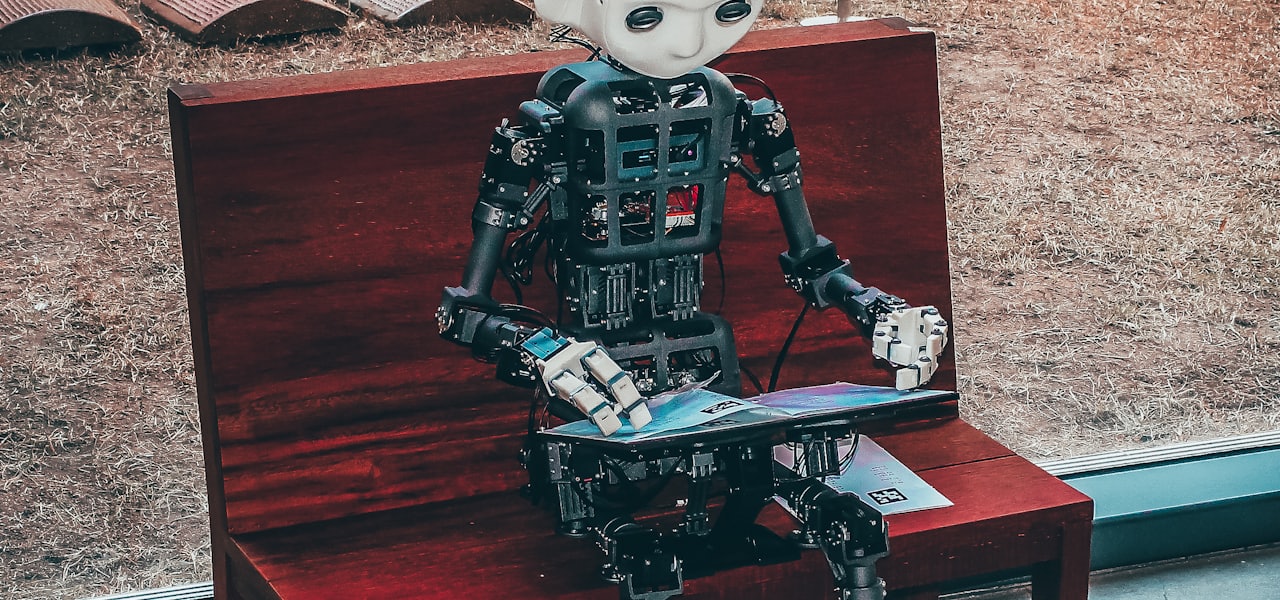
CloudMinds is an operator of cloud-based systems for cognitive robotics. == History == CloudMinds was founded in 2015 and is backed by SoftBank, Foxconn, Walden Venture Investments, and Keytone Ventures. CloudMinds has developed research in smart devices, robot control, high-speed security networks, and cloud intelligence integration. CloudMinds developed the Mobile Intranet Cloud Services (MCS) based on these technologies in order to increase the information security of the cloud robot remote control. The technology has been applied in the fields of finance, medicine, the military, public safety, and large-scale manufacturing. == U.S. sanctions == In May 2020, CloudMinds was added to the Bureau of Industry and Security's Entity List due to U.S. national security concerns.
KeyBase
KeyBase is a database and web application for managing and deploying interactive taxonomic keys for plants and animals developed by the Royal Botanic Gardens Victoria. KeyBase provides a medium where pathway keys which were traditionally developed for print and other classical types of media, can be used more effectively in the internet environment. The platform uses a concept called "keys" which can be easily linked together, joined with other keys, or merged into larger other seamless keys groups, with each still available to be browsed independently. Keys in the KeyBase database can be filtered and displayed in a variety of ways, filters, and formats.
Ancient text corpora
Ancient text corpora are the entire collection of texts from the period of ancient history, defined in this article as the period from the beginning of writing up to 300 AD. These corpora are important for the study of literature, history, linguistics, and other fields, and are a fundamental component of the world's cultural heritage. Chinese, Latin, and Greek are examples of ancient languages with significant text corpora, although much of these corpora are known to us via transmission (frequently via medieval manuscript copies) rather than in their original form. These texts – both transmitted and original – provide valuable insights into the history and culture of different regions of the world, and have been studied for centuries by scholars and researchers. Other ancient texts – particularly stone inscriptions and papyrus scrolls – have been published following archaeological research, notably the cuneiform corpus of c.10 million words and the c.5 million words in ancient Egyptian. Through advances in technology and digitization, ancient text corpora are more accessible than ever before. Tools such as the Perseus Digital Library and the Digital Corpus of Sanskrit have made it easier for researchers to access and analyze these texts. == Quantifying the corpora == Two types of ancient texts are known to modern scholars – those that have only survived in younger manuscripts, but whose great age is undisputed (this applies to the bulk of the Chinese, Brahmi, Greek, Latin, Hebrew and Avestan tradition), and those known from original inscriptions, papyri and other manuscripts. Counting of the words in each corpus presents significant methodological challenges – in principle, every single occurrence of a word in the text is counted separately, but in the case of parallel transmission of literary texts, only a single transmission is taken into account. Just as the Book of the Dead and the coffin texts are only included once in the number given for the Egyptian, the Greek and Latin literary works should only be counted according to one manuscript. If, on the other hand, tombs, royal inscriptions or economic documents of certain ancient languages often show a more or less identical form, this is not evaluated as a purely "parallel tradition". Attached prepositions are counted as separate words, except in the case of the definite article in Hebrew, Aramaic and Greek since it has no equivalent in most languages, so its frequency would significantly affect the comparability of numbers. === Languages with known size estimates === === South Asian === Sanskrit (Vedic Sanskrit and Classical Sanskrit) Indus script (3,800 items, c.20,000 characters) Brahmi script Old Tamil Early Indian epigraphy and Indian epic poetry Kharosthi Pali literature List of historic Indian texts === Mesoamerican === Olmec hieroglyphs Maya script === East Asian === Old Chinese Chinese classics The pre-Qin corpus: a collection of ancient Chinese texts written before the Qin dynasty (221 BCE). The corpus includes texts from Confucianism, Taoism, Legalism, and other schools of thought. The pre-Han corpus: a collection of ancient Chinese texts written before the Han dynasty (202 BCE). The corpus includes texts from Confucianism, Taoism, Legalism, and other schools of thought. See the Chinese Text Project Chinese bronze inscriptions, Oracle bone script, Seal script, Clerical script === Central Iranian languages === Prior to 300 AD, the Central Iranian languages are mainly in the form of Sassanid stone inscriptions in the two closely related idioms Middle Persian (Pahlavi scripts and Inscriptional Parthian), there are 5000 for the corpus of Middle Persian (mostly 3rd, but also 4th/5th centuries) and for the corpus of Parthian (3rd century) 3000 words. To what extent some of the Manichaean Middle Persian literary texts may date back to the 3rd century is difficult to estimate; Mani is said to have personally written the Shabuhragan totaling about 5000 words. In any case, if we combine Middle Persian and Parthian, we come to over 10,000 words. === Proto-Sinaitic === Proto-Sinaitic script has no more than about 400 letters (number of words is unknown since the script has not been fully interpreted). To a similar extent, there are probably approximately contemporaneous Proto-Canaanite inscriptions (ibid.). === Anatolian === Luwian cuneiform, approx. 3000 words the Palaic language few hundred words. Hieroglyphic Luwian the Lycian alphabet (the best attested Anatolian successor language written in alphabetic script) with about 5000 words The Lydian alphabet 109 inscriptions comprising about 1500 words The Phrygian alphabet the in-tomb inscriptions from the 2nd and 3rd centuries AD (approx. 1000 words) and in the so-called "old Phrygian" inscriptions less than 300 words The Carian alphabets whose texts, mainly from Egypt, contain around 600 words. === Old Italic === the Umbrian language attested essentially by the sacrificial instructions of the Iguvinian Tables with 5000 words the Oscan language (ibid.) with 2000 words the Messapic language with probably a good 1000 words (the estimate is difficult because most texts in this hardly understandable language do not use word separators) the Venetic language a few hundred words the Faliscan language a few hundred words Cisalpine Celtic inscriptions amount to approximately 2000 words, to which are added a number of glosses by classical authors === Iberia === Iberian scripts, more rarely written in Greek or Latin script, approx. 2500 words Celtiberian script, which refers to Celtic language testimonies in Iberian, but also in Latin script from Spain (approx. 1000 words) Southwest Paleohispanic script, 78 inscriptions, a few hundred words Lusitanian language, three monuments in Latin script, approx. 60 words === Germanic Northern Europe === Runic inscriptions dated before the 4th century amount to about 30 pieces, which contain no more than 50 words in total === Africa === Geʽez script: comparatively few inscriptions with a total of around 1,000 words before 300 AD. Following Christianization in the 4th century, more extensive texts are known. Libyco-Berber alphabet: over 1,000 inscriptions from the Maghreb, which are dated to Roman times. Most texts do not use a word separator; Peust estimates that the total number of words could be around 5,000 Meroitic script (Ancient Nubian): about 900 texts are known, which Peust estimates may contain approximately 10,000 words, albeit with uncertainty from the fact that the word separator is not used consistently in the Meroitic script. === Aegean === The Cretan Linear A inscriptions that have not yet been deciphered are available in about 2500 texts, which contain a total of around 20,000 characters. The total number of words can hardly be determined; Peust tentatively put it in the same order of magnitude as in Meroitic. In addition to the Linear A texts, there are also inscriptions Cretan hieroglyphs of a few hundred characters and texts written in the Greek alphabet, but not in Greek, with a few dozen words Cypriot syllabary in the first millennium BC, in which mostly Greek texts were recorded. The relevant texts comprise around 100 to 200 words. === Micro corpora === There are a significant number of ancient micro-corpus languages. Estimating the total number of attested ancient languages may be as difficult as estimating their corpus size. For example, Greek and Latin sources hand down an enormous amount of foreign-language glosses, the seriousness of which is not always certain. == Preservation and curation == Historic preservation and maintaining ancient text corpora presents several challenges, including issues with preservation, translation, and digitization. Many ancient texts have been lost over time, and those that survive may be damaged or fragmented. Translating ancient languages and scripts requires specialized expertise, and digitizing texts can be time-consuming and resource-intensive. == Corpus linguistics == The field of corpus linguistics studies language as expressed in text corpora. This includes the analysis of word frequency, collocations, grammar, and semantics. Ancient text corpora provide a valuable resource for corpus linguistics research, enabling scholars to explore the evolution of language and culture over time.
Yasuo Matsuyama
Yasuo Matsuyama (born March 23, 1947) is a Japanese researcher in machine learning and human-aware information processing. Matsuyama is a Professor Emeritus and an Honorary Researcher of the Research Institute of Science and Engineering of Waseda University. == Early life and education == Matsuyama received his bachelor’s, master’s and doctoral degrees in electrical engineering from Waseda University in 1969, 1971, and 1974 respectively. The dissertation title for the Doctor of Engineering is Studies on Stochastic Modeling of Neurons. There, he contributed to the spiking neurons with stochastic pulse-frequency modulation. Advisors were Jun’ichi Takagi, Kageo, Akizuki, and Katsuhiko Shirai. Upon the completion of the doctoral work at Waseda University, he was dispatched to the United States as a Japan-U.S. exchange fellow by the joint program of the Japan Society for the Promotion of Science, Fulbright Program, and the Institute of International Education. Through this exchange program, he completed his Ph.D. program at Stanford University in 1978. The dissertation title is Process Distortion Measures and Signal Processing. There, he contributed to the theory of probabilistic distortion measures and its applications to speech encoding with spectral clustering or vector quantization. His advisor was Robert. M. Gray. == Career == From 1977 to 1078, Matsuyama was a research assistant at the Information Systems Laboratory of Stanford University Archived 2018-03-16 at the Wayback Machine. From 1979 to 1996, he was a faculty of Ibaraki University, Japan (the final position was a professor and chairperson of the Information and System Sciences Major). Since 1996, he was a Professor of Waseda University, Department of Computer Science and Engineering. From 2011 to 2013, he was the director of the Media Network Center of Waseda University. At the 2011 Tōhoku earthquake and tsunami of March 11, 2011, he was in charge of the safety inquiry of 65,000 students, staffs and faculties. Since 2017, Matsuyama is a Professor Emeritus and an Honorary Researcher of the Research Institute of Science and Engineering of Waseda University. Since 2018, he serves as an acting president of the Waseda Electrical Engineering Society. == Work == Matsuyama’s works on machine learning and human-aware information processing have dual foundations. Studies on the competitive learning (vector quantization) for his Ph.D. at Stanford University brought about his succeeding works on machine learning contributions. Studies on stochastic spiking neurons for his Dr. Engineering at Waseda University set off applications of biological signals to the machine learning. Thus, his works can be grouped reflecting these dual foundations. Statistical machine learning algorithms: The use of the alpha-logarithmic likelihood ratio in learning cycles generated the alpha-EM algorithm (alpha-Expectation maximization algorithm). Because the alpha-logarithm includes the usual logarithm, the alpha-EM algorithm contains the EM-algorithm (more precisely, the log-EM algorithm). The merit of the speedup by the alpha-EM over the log-EM is due to the ability to utilize the past information. Such a usage of the messages from the past brought about the alpha-HMM estimation algorithm (alpha-hidden Markov model estimation algorithm) that is a generalized and faster version of the hidden Markov model estimation algorithm (HMM estimation algorithm). Competitive learning on empirical data: Starting from the speech compression studies at Stanford, Matsuyama developed generalized competitive learning algorithms; the harmonic competition and the multiple descent cost competition. The former realizes the multiple-object optimization. The latter admits deformable centroids. Both algorithms generalize the batch-mode vector quantization (simply called, vector quantization) and the successive-mode vector quantization (or, called learning vector quantization). A hierarchy from the alpha-EM to the vector quantization: Matsuyama contributed to generate and identify the hierarchy of the above algorithms. Alpha-EM ⊃ log-EM ⊃ basic competitive learning (vector quantization, VQ; or clustering). On the class of the vector quantization and competitive learning, he contributed to generate and identify the hierarchy of VQs. VQ ⇔ {batch mode VQ, and learning VQ} ⊂ {harmonic competition} ⊂ {multiple descent cost competition}. Applications to Human-aware information processing: The dual foundations of his led to the applications to huma-aware information processing. Retrieval systems for similar images and videos. Bipedal humanoid operations via invasive and noninvasive brain signals as well as gestures. Continuous authentication of uses by brain signals. Self-organization and emotional feature injection based on the competitive learning. Decomposition of DNA sequences by the independent component analysis (US Patent: US 8,244,474 B2). Data compression of speech signals by the competitive learning. The above theories and applications work as contributions to IoCT (Internet of Collaborative Things) and IoXT (http://www.asc-events.org/ASC17/Workshop.php Archived 2018-02-06 at the Wayback Machine). == Awards and honors == 2016: e-Teaching Award of Waseda University 2015: Best Textbook Award by the Japanese Society of Information Processing 2014: Fellow of the Japanese Society of Information Processing 2013: IEEE Life Fellow 2008: Y. Dote Memorial Best Paper Award of CSTST 2008 from ACM and IEEE 2006: LSI Intellectual Property Design Award from the LSI IP Committee 2004: Best Paper Award for Application Oriented Research from Asia Pacific Neural Network Assembly 2002: Fellow Award from the Institute of Electronics, Information and Communication Engineers. 2001: Telecommunication System Major Award of the Telecommunications Advancement Foundation 2001: Outstanding Paper Award of IEEE Transactions on Neural Networks Archived 2013-01-17 at the Wayback Machine 1998: Fellow Award from IEEE for contributions to learning algorithms with competition. 1992: Best Paper Award from the Institute of Electronics, Information and Communication Engineers 1989: Telecommunication System Promotion Award of the Telecommunications Advancement Foundation
Radford M. Neal
Radford M. Neal (born September 12, 1956) is a professor emeritus at the Department of Statistics and Department of Computer Science at the University of Toronto, where he held a Canada research chair in statistics and machine learning. == Education and career == Neal studied computer science at the University of Calgary, where he received his B.Sc. in 1977 and M.Sc. in 1980, with thesis work supervised by David Hill. He worked for several years as a sessional instructor at the University of Calgary and as a statistical consultant in the industry before coming back to the academia. Neal continued his study at the University of Toronto, where he received his Ph.D. in 1995 under the supervision of Geoffrey Hinton. Neal became an assistant professor at the University of Toronto in 1995, an associated professor in 1999 and a full professor since 2001. He was the Canada Research Chair in Statistics and Machine Learning from 2003 to 2016 and retired in 2017. Neal has made great contributions in the area of machine learning and statistics, where he is particularly well known for his work on Markov chain Monte Carlo, error correcting codes and Bayesian learning for neural networks. He is also known for his blog and as the developer of pqR: a new version of the R interpreter.
Frame grabber
A frame grabber is an electronic device that captures (i.e., "grabs") individual, digital still frames from an analog video signal or a digital video stream. It is usually employed as a component of a computer vision system, in which video frames are captured in digital form and then displayed, stored, transmitted, analyzed, or combinations of these. Historically, frame grabber expansion cards were the predominant way to interface cameras to PCs. Other interface methods have emerged since then, with frame grabbers (and in some cases, cameras with built-in frame grabbers) connecting to computers via interfaces such as USB, Ethernet and IEEE 1394 ("FireWire"). Early frame grabbers typically had only enough memory to store a single digitized video frame, whereas many modern frame grabbers can store multiple frames. Modern frame grabbers often are able to perform functions beyond capturing a single video input. For example, some devices capture audio in addition to video, and some devices provide, and concurrently capture frames from multiple video inputs. Other operations may be performed as well, such as deinterlacing, text or graphics overlay, image transformations (e.g., resizing, rotation, mirroring), and conversion to JPEG or other compressed image formats. To satisfy the technological demands of applications such as radar acquisition, manufacturing and remote guidance, some frame grabbers can capture images at high frame rates, high resolutions, or both. == Circuitry == Analog frame grabbers, which accept and process analog video signals, include these circuits: Input signal conditioner that buffers the analog video input signal to protect downstream circuitry Video decoder that converts SD analog video (e.g., NTSC, SECAM, PAL) or HD analog video (e.g., AHD, HD-TVI, HD-CVI) to a digital format Digital frame grabbers, which accept and process digital video streams, include these circuits: Digital video decoder that interfaces to and converts a specific type of digital video source, such as Camera Link, CoaXPress, DVI, GigE Vision, LVDS, or SDI Circuitry common to both analog and digital frame grabbers: Memory for storing the acquired image (i.e., a frame buffer) A bus interface through which a processor can control the acquisition and access the data General purpose I/O for triggering image acquisition or controlling external equipment == Applications == === Healthcare === Frame grabbers are used in medicine for many applications, including telenursing and remote guidance. In situations where an expert at another location needs to be consulted, frame grabbers capture the image or video from the appropriate medical equipment, so it can be sent digitally to the distant expert. === Manufacturing === "Pick and place" machines are often used to mount electronic components on circuit boards during the circuit board assembly process. Such machines use one or more cameras to monitor the robotics that places the components. Each camera is paired with a frame grabber that digitizes the analog video, thus converting the video to a form that can be processed by the machine software. === Network security === Frame grabbers may be used in security applications. For example, when a potential breach of security is detected, a frame grabber captures an image or a sequence of images, and then the images are transmitted across a digital network where they are recorded and viewed by security personnel. === Personal use === In recent years with the rise of personal video recorders like camcorders, mobile phones, etc. video and photo applications have gained ascending prominence. Frame grabbing is becoming very popular on these devices. === Astronomy & astrophotography === Amateur astronomers and astrophotographers use frame grabbers when using analog "low light" cameras for live image display and internet video broadcasting of celestial objects. Frame grabbers are essential to connect the analog cameras used in this application to the computers that store or process the images.
Corpus linguistics
Corpus linguistics is an empirical method for the study of language by text corpus (plural corpora). Corpora are balanced, often stratified collections of authentic, "real world", text of speech or writing that aim to represent a given linguistic variety. Today, corpora are generally machine-readable data collections. Corpus linguistics proposes that a reliable analysis of a language is more feasible with corpora collected in the field—the natural context ("realia") of that language—with minimal experimental interference. Large collections of text, though corpora may also be small in terms of running words, allow linguists to run quantitative analyses on linguistic concepts that may be difficult to test in a qualitative manner. The text-corpus method uses the body of texts in any natural language to derive the set of abstract rules which govern that language. Those results can be used to explore the relationships between that subject language and other languages which have undergone a similar analysis. The first such corpora were manually derived from source texts, but now that work is automated. Corpora have not only been used for linguistics research, they have been increasingly used to compile dictionaries (starting with The American Heritage Dictionary of the English Language in 1969) and reference grammars, with A Comprehensive Grammar of the English Language, published in 1985, as a first. Experts in the field have differing views about the annotation of a corpus. These views range from John McHardy Sinclair, who advocates minimal annotation so texts speak for themselves, to the Survey of English Usage team (University College, London), who advocate annotation as allowing greater linguistic understanding through rigorous recording. == History == Some of the earliest efforts at grammatical description were based at least in part on corpora of particular religious or cultural significance. For example, Prātiśākhya literature described the sound patterns of Sanskrit as found in the Vedas, and Pāṇini's grammar of classical Sanskrit was based at least in part on analysis of that same corpus. Similarly, the early Arabic grammarians paid particular attention to the language of the Quran. In the Western European tradition, scholars prepared concordances to allow detailed study of the language of the Bible and other canonical texts. === English corpora === A landmark in modern corpus linguistics was the publication of Computational Analysis of Present-Day American English in 1967. Written by Henry Kučera and W. Nelson Francis, the work was based on an analysis of the Brown Corpus, which is a structured and balanced corpus of one million words of American English from the year 1961. The corpus comprises 2000 text samples, from a variety of genres. The Brown Corpus was the first computerized corpus designed for linguistic research. Kučera and Francis subjected the Brown Corpus to a variety of computational analyses and then combined elements of linguistics, language teaching, psychology, statistics, and sociology to create a rich and variegated opus. A further key publication was Randolph Quirk's "Towards a description of English Usage" in 1960 in which he introduced the Survey of English Usage. Quirk's corpus was the first modern corpus to be built with the purpose of representing the whole language. Shortly thereafter, Boston publisher Houghton-Mifflin approached Kučera to supply a million-word, three-line citation base for its new American Heritage Dictionary, the first dictionary compiled using corpus linguistics. The AHD took the innovative step of combining prescriptive elements (how language should be used) with descriptive information (how it actually is used). Other publishers followed suit. The British publisher Collins' COBUILD monolingual learner's dictionary, designed for users learning English as a foreign language, was compiled using the Bank of English. The Survey of English Usage Corpus was used in the development of one of the most important Corpus-based Grammars, which was written by Quirk et al. and published in 1985 as A Comprehensive Grammar of the English Language. The Brown Corpus has also spawned a number of similarly structured corpora: the LOB Corpus (1960s British English), Kolhapur (Indian English), Wellington (New Zealand English), Australian Corpus of English (Australian English), the Frown Corpus (early 1990s American English), and the FLOB Corpus (1990s British English). Other corpora represent many languages, varieties and modes, and include the International Corpus of English, and the British National Corpus, a 100 million word collection of a range of spoken and written texts, created in the 1990s by a consortium of publishers, universities (Oxford and Lancaster) and the British Library. For contemporary American English, work has stalled on the American National Corpus, but the 400+ million word Corpus of Contemporary American English (1990–present) is now available through a web interface. The first computerized corpus of transcribed spoken language was constructed in 1971 by the Montreal French Project, containing one million words, which inspired Shana Poplack's much larger corpus of spoken French in the Ottawa-Hull area. === Multilingual corpora === In the 1990s, many of the notable early successes on statistical methods in natural-language programming (NLP) occurred in the field of machine translation, due especially to work at IBM Research. These systems were able to take advantage of existing multilingual textual corpora that had been produced by the Parliament of Canada and the European Union as a result of laws calling for the translation of all governmental proceedings into all official languages of the corresponding systems of government. There are corpora in non-European languages as well. For example, the National Institute for Japanese Language and Linguistics in Japan has built a number of corpora of spoken and written Japanese. Sign language corpora have also been created using video data. === Ancient languages corpora === Besides these corpora of living languages, computerized corpora have also been made of collections of texts in ancient languages. An example is the Andersen-Forbes database of the Hebrew Bible, developed since the 1970s, in which every clause is parsed using graphs representing up to seven levels of syntax, and every segment tagged with seven fields of information. The Quranic Arabic Corpus is an annotated corpus for the Classical Arabic language of the Quran. This is a recent project with multiple layers of annotation including morphological segmentation, part-of-speech tagging, and syntactic analysis using dependency grammar. The Digital Corpus of Sanskrit (DCS) is a "Sandhi-split corpus of Sanskrit texts with full morphological and lexical analysis... designed for text-historical research in Sanskrit linguistics and philology." === Corpora from specific fields === Besides pure linguistic inquiry, researchers had begun to apply corpus linguistics to other academic and professional fields, such as the emerging sub-discipline of Law and Corpus Linguistics, which seeks to understand legal texts using corpus data and tools. The DBLP Discovery Dataset concentrates on computer science, containing relevant computer science publications with sentient metadata such as author affiliations, citations, or study fields. A more focused dataset was introduced by NLP Scholar, a combination of papers of the ACL Anthology and Google Scholar metadata. Corpora can also aid in translation efforts or in teaching foreign languages. == Methods == Corpus linguistics has generated a number of research methods, which attempt to trace a path from data to theory. Wallis and Nelson (2001) first introduced what they called the 3A perspective: Annotation, Abstraction and Analysis. Annotation consists of the application of a scheme to texts. Annotations may include structural markup, part-of-speech tagging, parsing, and numerous other representations. Abstraction consists of the translation (mapping) of terms in the scheme to terms in a theoretically motivated model or dataset. Abstraction typically includes linguist-directed search but may include e.g., rule-learning for parsers. Analysis consists of statistically probing, manipulating and generalising from the dataset. Analysis might include statistical evaluations, optimisation of rule-bases or knowledge discovery methods. Most lexical corpora today are part-of-speech-tagged (POS-tagged). However even corpus linguists who work with 'unannotated plain text' inevitably apply some method to isolate salient terms. In such situations annotation and abstraction are combined in a lexical search. The advantage of publishing an annotated corpus is that other users can then perform experiments on the corpus (through corpus managers). Linguists with other interests and differing perspectives than the originators' can exploit this work. By sharing data